
Overview
A spherical autonomous robot designed for low-cost freshwater monitoring, integrating reaction-wheel actuation, a buoyancy engine, and a modular sensor suite for real-time environmental data collection.
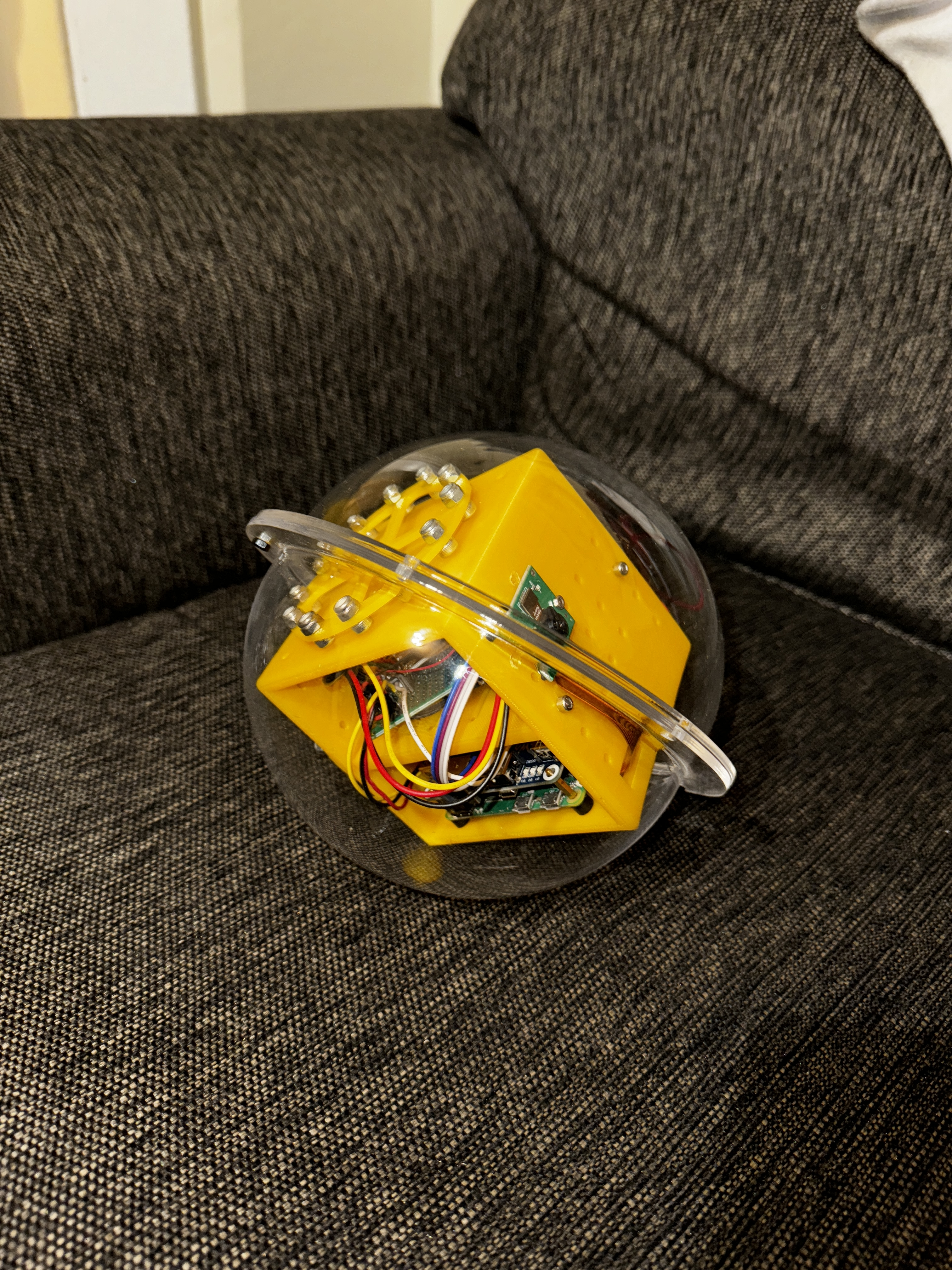
Figure 1. A prototype assembly of one of the components in the robot called a reaction wheel. Uses angular momentum to orient the sphere. Two of these on the sphere control 3 degrees of freedom
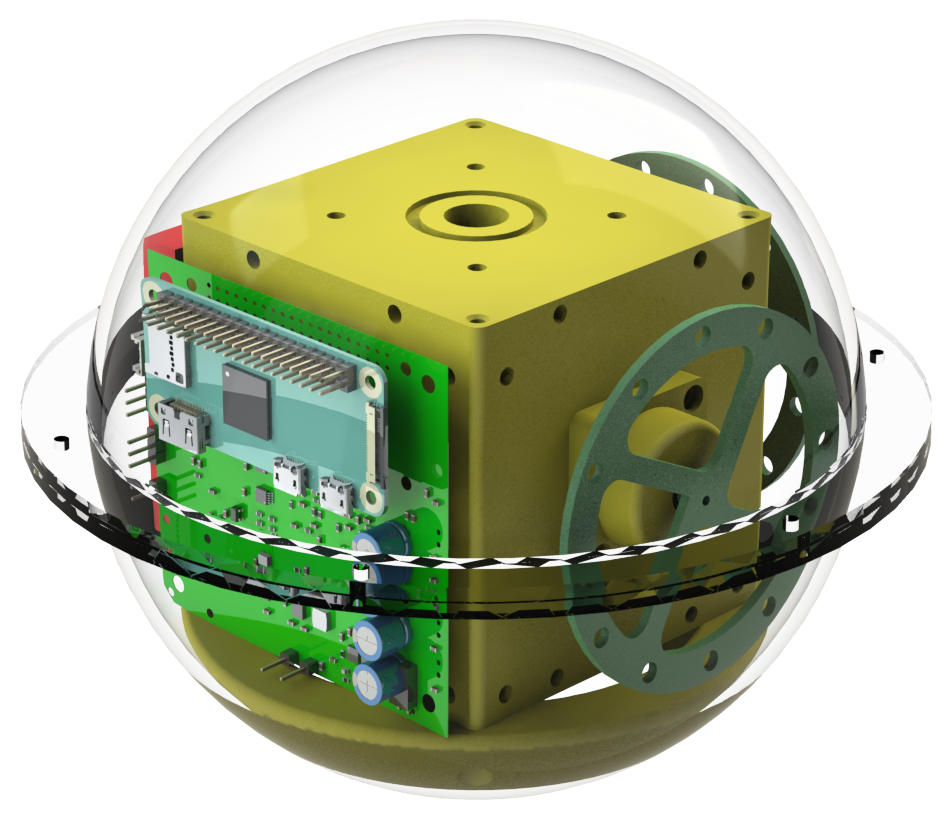
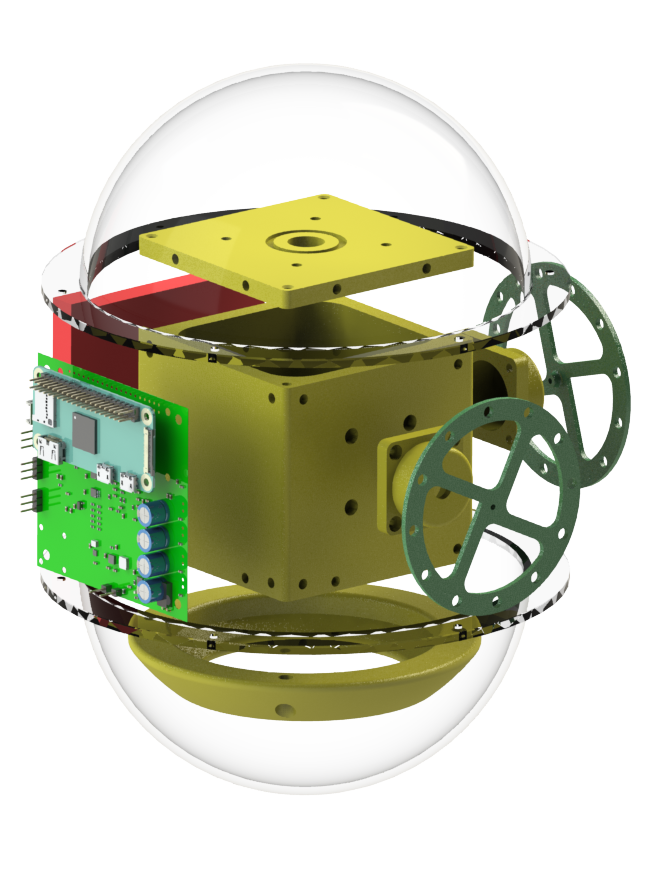
Figure 2. The models above were designed and rendered in SolidWorks.
Project Objectives
- Design an autonomous spherical robot for underwater and surface navigation.
- Implement reaction-wheel and buoyancy propulsion for precise movement.
- Integrate sensors to monitor key water-quality parameters in real time.
- Ensure a compact, waterproof, and energy-efficient design for extended operation.
Diagram of Electronics
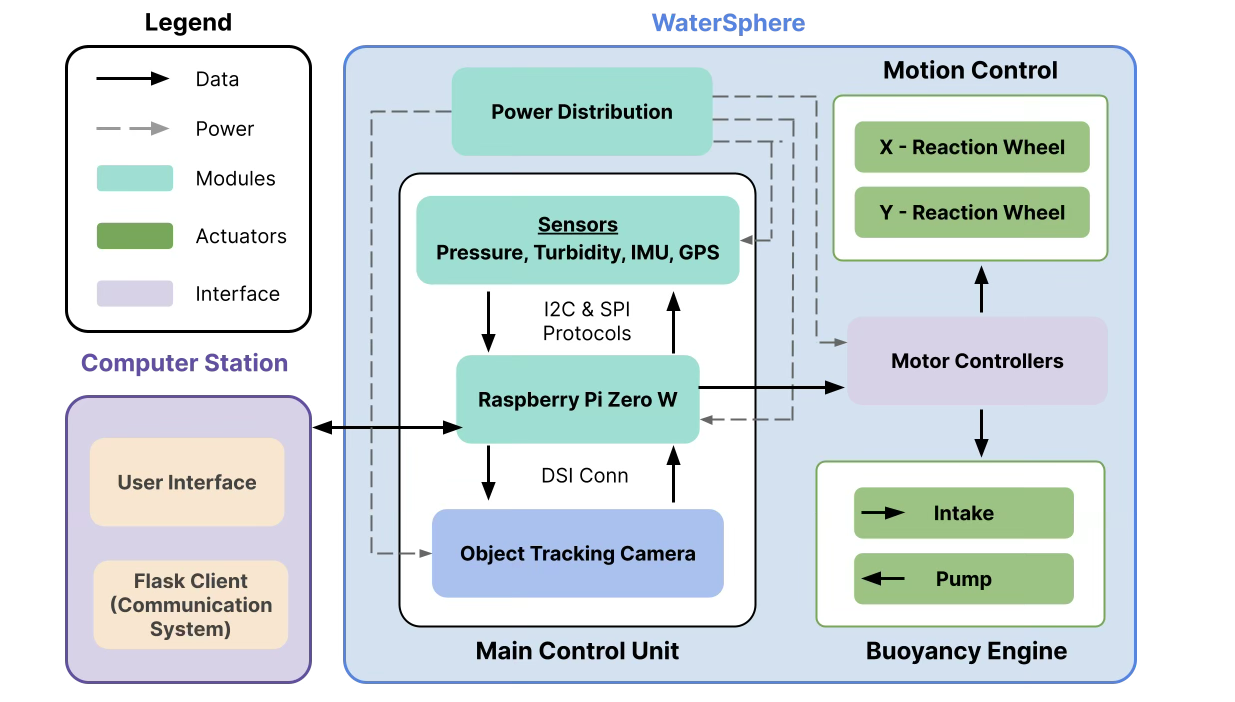
Figure 2. The diagram above captures the computer station running a flask software for communication, the main control unit with all the sensors and control logic, the power distribution, motor controllers, and buoyancy engine.
Hardware used
Below is a table for all the components that were used to build this sphere.
| Component | Description |
|---|---|
| GT-U7 GPS Module | Provides global positioning data for navigation and locating the robot in aquatic environments. |
| ADS1115 16-bit ADC | 4-channel ADC converter used for accurate measurement of analog sensor inputs. |
| BN008 IMU | Supplies orientation, acceleration, and angular velocity data for stable underwater movement. |
| L298N H-Bridge Motor Driver | Controls the reaction wheels and buoyancy engine, capable of handling high-current loads. |
| 9V Buck-Boost Converter | Provides stable and efficient power regulation for the reaction wheels and buoyancy engine. |
| BQ25303J Battery Charger | Switch-mode charger used for recharging the robot’s lithium-ion battery cells. |
| 4× Samsung 18650 Cells (3500 mAh each) | Wired in parallel to deliver ~14 Ah total capacity, enabling ~18 hours of operation. |
| Raspberry Pi Zero 2W | Serves as the main controller, offering onboard processing and Wi-Fi communication. |
Assembly and Circuit Board
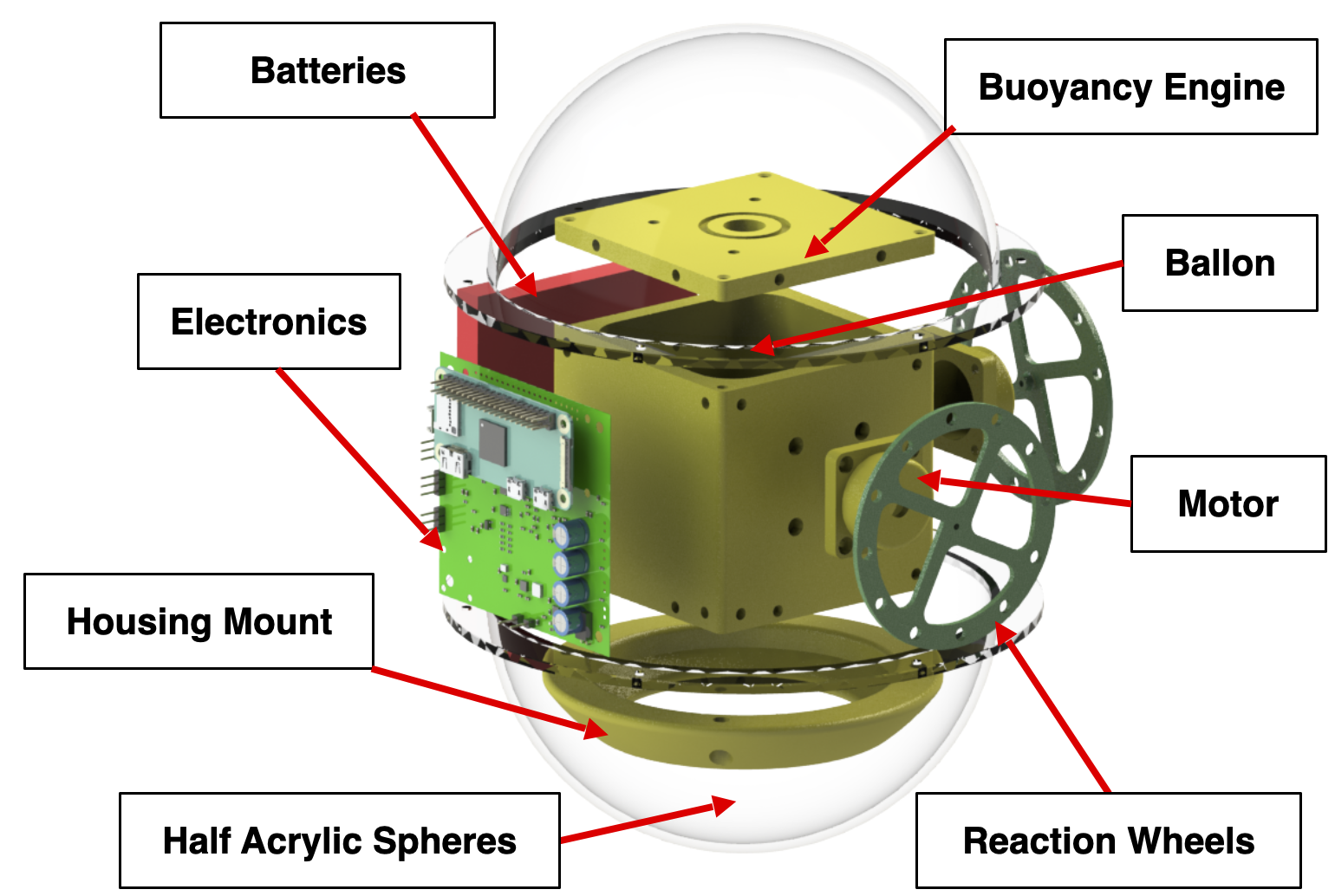
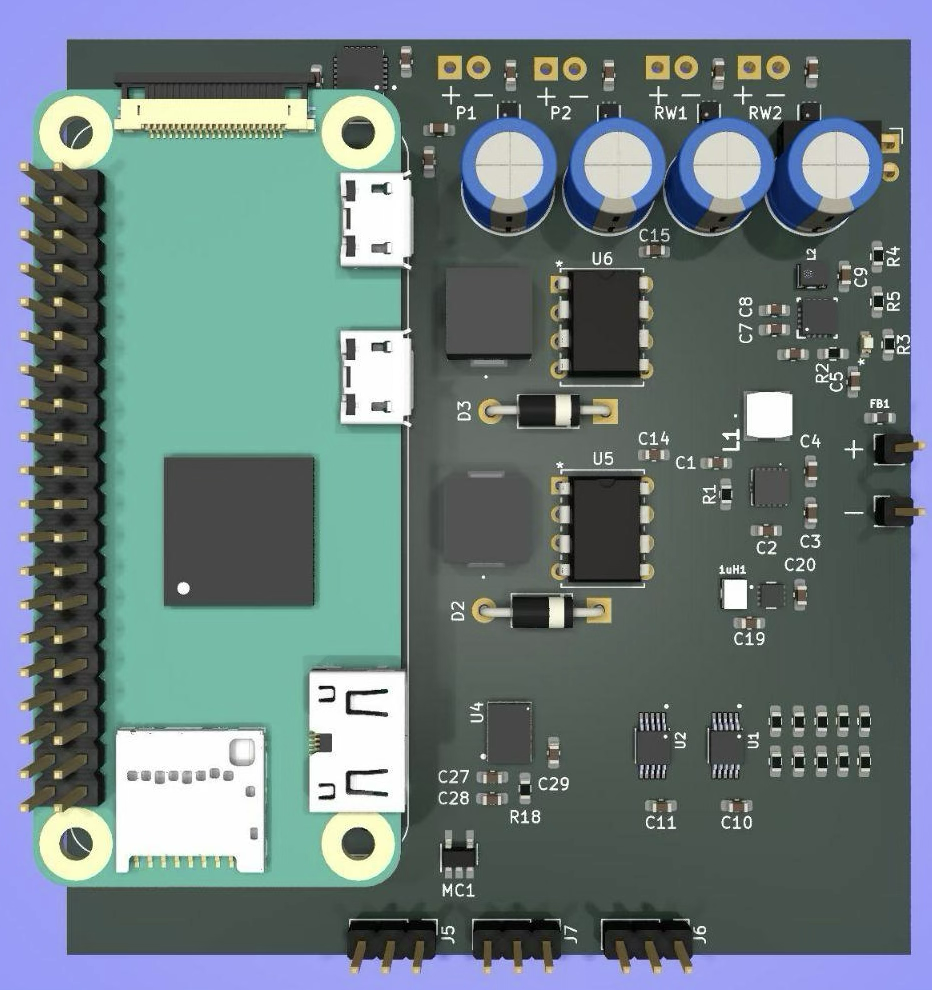
Figure 3. The model on the left labels all the components of the sphere and on the right, is a 3D model of the printed circuit board designed in KiCAD.
Software
All the software for the project is uploaded on github here